Anyone who’s camped more than once has been there, standing by the picnic table, cooler lid open, doing mental math about ice melt and meal safety while pretending everything’s fine.
Keeping food cold outdoors isn’t just about comfort; it’s about health, planning, and peace of mind—so how do you actually keep food cold while camping without turning the trip into a logistics headache?
Coolers
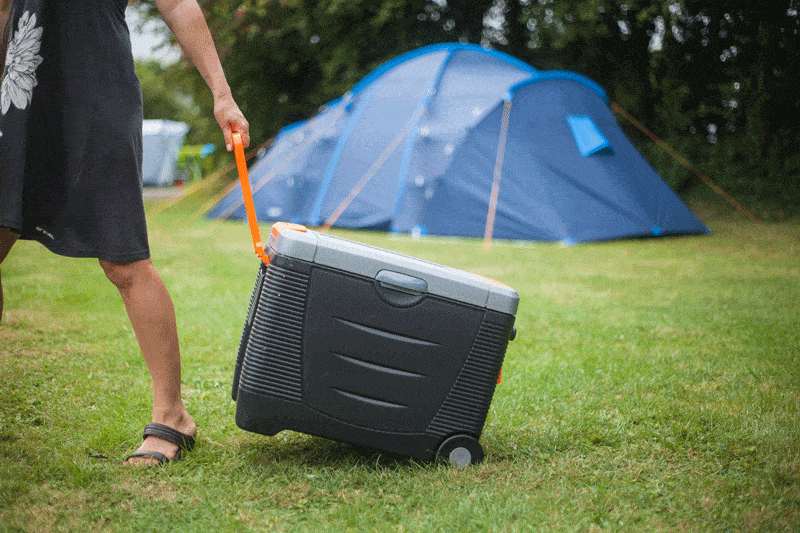
Some coolers are stoic and reliable, the kind that hold ice for days and feel like you could sit on them during a storm. Others are lightweight, cheerful, and basically useless after 24 hours. The trick isn’t buying the most expensive cooler on the shelf; it’s matching the cooler to the trip. Weekend car camping? Almost any decent insulated box works. Five days in summer heat? That’s a different story.
Putting warm food into a cold cooler is like pouring hot coffee into a thermos and expecting iced tea. If you can, chill everything at home first, even the cooler itself. It feels extra, but it buys you real time. And time, out there, is currency.
Ice
Block ice lasts longer than cubes. Frozen water bottles last longer than both. Dry ice is powerful but moody and requires gloves, caution, and emotional maturity.
The trick isn’t just adding more ice. It’s managing how fast heat gets in. Think of your cooler as a tiny house in a heatwave. Insulation matters more than square footage. A cheap cooler with premium ice still loses faster than a well-built cooler with average ice.
Food choice
Some foods are divas. Raw chicken, fresh milk, soft cheese—they demand perfect conditions and punish you when you fail. Other foods are chill, literally and emotionally. Hard cheeses, cured meats, vegetables, canned stuff, dried meals.
This is where mild contradictions come in. We tell people to keep everything cold, but also to accept that not everything needs to be fridge-level cold all the time. Apples don’t care. Carrots don’t panic. Even eggs, depending on where you live, are more resilient than people think.
Pack food
Raw meat goes at the bottom, not just for safety but because cold air sinks. Frequently used items go on top, so you’re not digging through layers like an archaeologist every time you want a soda.
Also, portioning matters. A big slab of frozen stew stays cold longer than five tiny containers. Thermal mass is real. Physics doesn’t care about your Pinterest organization system.
Placement beats
A cooler in the sun is basically a science experiment about heat transfer. A cooler in the shade, under a table, covered with a damp towel? That’s survival strategy. It’s the same cooler, same ice, same food—but radically different outcome.
We want to buy solutions, not rearrange chairs. But sometimes moving your cooler two meters into shade does more than upgrading to a model that costs twice as much.
Portable energy
Traditional campsites assume you’ll either rely on ice or have access to hookups. But dispersed camping, overlanding, and van travel don’t play by those rules.
Portable power sources fill the gap. They don’t smell like fuel, don’t require constant monitoring, and don’t announce themselves. They just sit there, storing energy, feeding devices quietly. When paired with efficient cooling gear, they stretch cold storage from days to weeks.
Opening the lid
Every time you check what snacks are left, you’re letting warm air in and cold air out. It’s like leaving your fridge door open at home, except you don’t have unlimited electricity in the forest. Group food by meals so you don’t dig around. Put drinks in a separate cooler if you can, because thirsty people are basically cooler saboteurs.
Habits
Here’s a small truth that feels boring but works: eat the most perishable food first. Meat before veggies. Dairy before fruit. Fancy stuff before simple stuff. It’s like working through a fridge at home, just faster and with higher stakes.
Also, don’t trust your nose alone. Bacteria don’t always announce themselves with dramatic smells. If food sat warm for hours, especially meat, that’s not bravery—that’s gambling.
Final thoughts
Keeping food cold while camping isn’t about one trick or one product. It’s about understanding heat, planning realistically.
For short trips, ice and discipline still work. For longer adventures, powered cooling and portable energy quietly take over, making the experience smoother without stealing the spotlight
A setup powered by something like an ALLPOWERS power station simply means your food stays safe, your drinks stay cold, and your trip isn’t shaped by the nearest gas station or melting ice schedule.